

How Third-Party Payments Work
Some shoppers pay with an app or service outside of Vori, like Venmo, Zelle, or Cash App. The POS lets you record these payments so the sale closes and your reports show how the shopper paid. Here’s how it works:- The shopper sends the money straight to your store’s account on the third-party app or service.
- You confirm the payment arrived in that account.
- The cashier selects the matching payment method on the POS to close the sale.
Payment Methods You Can Turn On
Vori Support turns these payment methods on for your store. Contact Vori Support and tell us which ones you’d like, and we’ll add them to your POS payment screen.House Account, Gift Certificate, Manufacturer’s Coupon, and QR Pay are turned on the same way but have their own checkout steps. See Accept and Redeem Gift Certificates on the POS and Apply a Manufacturer or Third-Party Coupon to an Order.
Record a Third-Party Payment at Checkout
- Ring up the shopper’s items as usual.
- Select Complete Payment.
- Choose Other as the payment type.
-
On the Select Other Payment Method screen, select the payment method the shopper used, like PayPal or Venmo. Only the methods turned on for your store appear here.
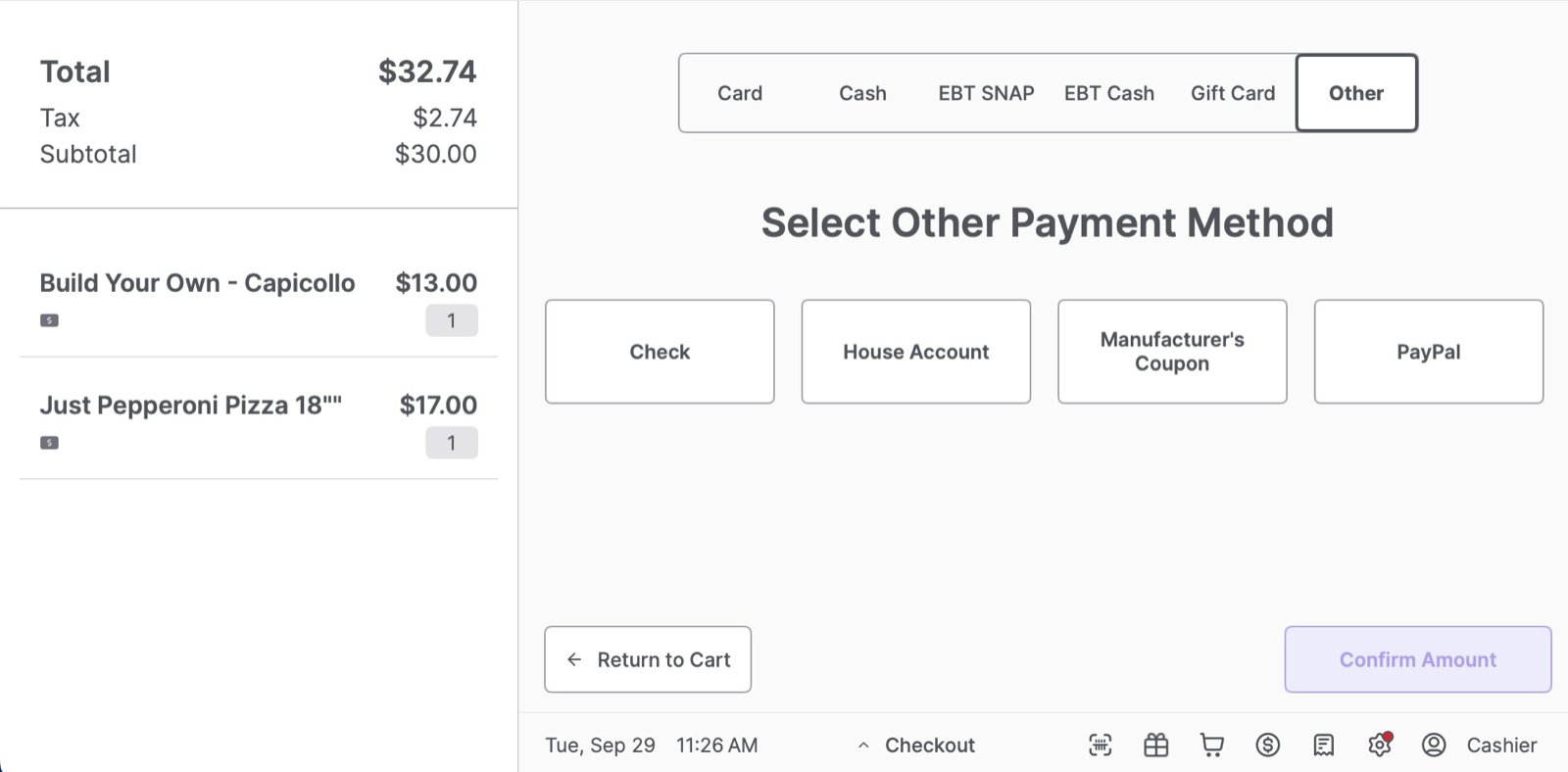
- Check that the amount matches what the shopper sent, then select Confirm Amount.
- Select Print Receipt or No Receipt.
Refund a Third-Party Payment
The POS can’t send money back through a third-party app. To refund a sale paid with one of these methods, refund the shopper as Cash, or send the refund yourself through the same app outside of Vori. To learn more, see Process Refunds on the POS.Reconcile Third-Party Payments
Because this money doesn’t go through your card processor, it won’t show up in your card deposit. Match these payments against your store’s account on each app or service instead.- Each payment method shows up by name in your POS reporting, separate from card and cash. Compare those totals to what landed in each third-party account.
- If you use an accounting integration, map each payment method to a General Ledger (GL) account. See GL Account Mapping.